Bedding & small-space living
Adjustable Bases and Bedding: A Guide to Fit, Flexibility, and Care
An adjustable base can raise the head, lift the legs, or shift the whole sleep surface through the night. That movement makes bedding fit more than a question of mattress size: pocket depth, elastic, fabric, and setup all matter. A few careful checks can help sheets stay in place and make everyday care simpler.
Why an adjustable base changes the bedding equation
A standard bed stays still. Its sheets are stretched over a mattress that holds the same shape from bedtime until morning. An adjustable base changes that relationship. When the platform bends at its joints, the mattress follows, and the fabric on top must accommodate a moving surface. A sheet that looks secure when the bed is flat may tug at the corners, pull loose, or wrinkle when the head or foot section rises.
The solution is not necessarily a special sheet marketed for adjustable beds. A good fit begins with accurate measurements and a clear understanding of the bed’s configuration. A fitted sheet with the right dimensions, enough pocket depth, and elastic that grips securely can work well. Fabric construction and the way the sheet is put on matter, too.
It helps to think of the bed as a system: mattress, adjustable platform, bedding, and any accessories that rest between or around them. If one part is unusually thick, loose, or incompatible with movement, it can affect the rest. The goal is a smooth, comfortable sleep surface that can move without placing unnecessary strain on the sheet or mattress.
Start with the mattress, not the label
Before shopping for bedding, confirm the mattress’s actual length, width, and depth. The size name—Twin XL, Queen, or King, for example—provides a useful starting point, but the name alone does not tell you how deeply the mattress sits or whether the bed uses one continuous surface or two independently moving sections.
Measure the mattress from edge to edge, including any built-in pillow top or attached comfort layer. For depth, measure from the bottom edge to the highest point of the sleep surface. If a separate topper is part of the setup, measure the mattress and topper together. A topper can add enough height to turn a previously suitable fitted sheet into one that pulls tight or slips off.
Also check whether the mattress has a rounded profile, a pronounced pillow top, or unusually soft edges. These features can affect how the fitted sheet sits and how much fabric is needed to wrap beneath the mattress. The manufacturer’s mattress specifications can help verify measurements, but direct measurement is useful when the bed has been in service for a while or includes added layers.
- Length and width: Measure the mattress itself rather than relying only on the bed frame or platform.
- Depth: Include pillow tops, mattress pads, and toppers that remain in place under the fitted sheet.
- Configuration: Note whether the bed is a single mattress, split mattress, or two-piece adjustable setup.
- Extra layers: Account for protectors and pads, which add thickness and can change the required pocket depth.
These checks are especially useful when replacing only the sheets in an existing bedroom. They reduce the chance of buying bedding that matches the nominal mattress size but cannot stretch comfortably around its actual depth.
Understand split configurations
Some adjustable beds use two mattress sections so each side can move separately. A split King setup, for instance, may pair two Twin XL mattresses beneath a shared frame or use another configuration specified by the bed’s manufacturer. In these arrangements, the fitted sheets may need to be sized for each individual mattress rather than for the full combined width.
Before choosing bedding, determine what moves independently. A shared top sheet can cover both sides, while separate fitted sheets may allow each mattress to articulate without pulling fabric across the center. The right arrangement depends on the mattress design, the way the base operates, and household preferences. Check the bed and mattress documentation for guidance on compatible sheet styles.
There is no universal rule that one bedding configuration suits every adjustable bed. A sheet set intended for a split setup may include multiple fitted sheets, while a conventional set may provide one. Read the contents and sizing information carefully, and compare the listed fitted-sheet measurements with the dimensions of each mattress section.
For a split system, it is also worth considering how shared blankets behave when one side is raised. A flat sheet or duvet may drift toward the lower side, or feel restrictive if it is tucked tightly beneath both mattresses. Leaving enough ease for movement, and testing the bed through its normal positions, can reveal whether the top layers need to be arranged differently.
Pocket depth: enough room without excess fabric
Fitted-sheet pocket depth describes how much mattress height the sheet is designed to cover. A shallow pocket may not reach far enough beneath a tall mattress, especially when a mattress pad or topper is included. The result is often a corner that pops free as the bed moves. At the other extreme, a pocket that is much deeper than necessary can leave loose fabric beneath the mattress, where it may bunch or shift.
Use the combined depth of the mattress and any layers that will sit under the fitted sheet as a guide. Then compare that measurement with the sheet’s stated pocket depth. Product descriptions do not always explain whether a listed depth includes a tolerance for extra fabric, so check the manufacturer’s sizing notes when available. If the depth is close to the maximum specified, consider whether the elastic and fabric construction can accommodate it comfortably.
Do not compensate for a poor fit by forcing the sheet into place. Overstretching corners can place strain on seams and elastic and may make the sheet more likely to come loose during movement. A fitted sheet should wrap around the mattress with enough tension to stay secure, but not so much that it feels as if it is under constant stress.
Some sheets use elastic around the full perimeter; others use elastic only at the corners or along selected edges. Full-perimeter elastic can provide a more continuous grip, while corner elastic may be perfectly adequate on a suitable mattress. The important question is how the sheet performs on your particular bed, not whether one construction is universally superior.
Fabric and construction affect movement
When an adjustable base changes shape, the fitted sheet needs to move with the mattress rather than resist it. A fabric with some give, a well-shaped cut, and secure elastic may accommodate that movement more readily than a very tight sheet with little flexibility. Yet flexibility is only one part of the equation: fiber, weave, finish, and sewing quality all influence how bedding feels and wears.
Cotton percale is usually associated with a crisp, matte hand and a lighter feel. Cotton sateen tends to feel smoother and drape more fluidly. Neither weave guarantees a perfect fit on an adjustable base. The sheet’s dimensions, cut, and elastic remain essential, but the differences in touch and drape can help people choose a surface that feels comfortable in regular use.
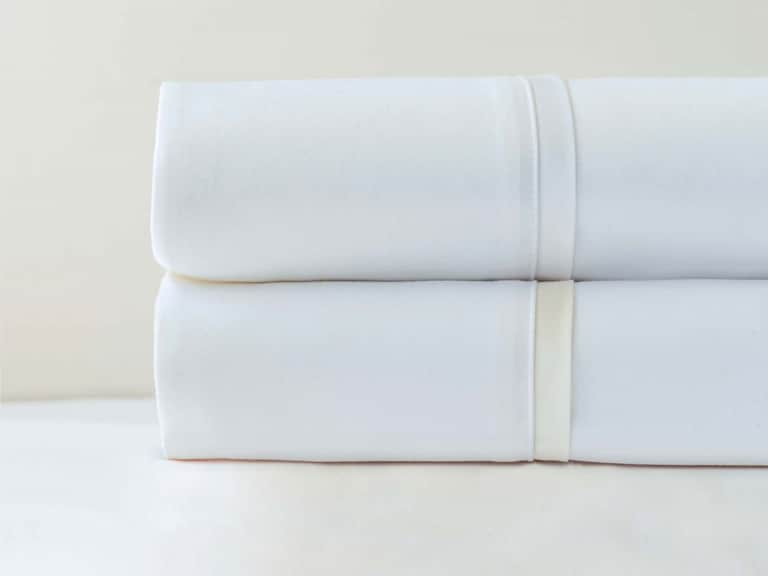
For example, the Bovi Estate Sheet Set is made from long-staple cotton sateen and is described as having a smooth feel and a 500-thread-count weave. It is available in Twin, Queen, and King sizes. That makes it an example of sateen bedding to consider when comparing fabric feel, but shoppers should confirm the fitted-sheet dimensions and pocket depth with the seller before using it on a particular adjustable setup. The product information does not establish compatibility with every mattress depth or split configuration.
Thread count can be one detail in a comparison, but it should not be treated as a stand-alone measure of performance. Fiber quality, weave, finishing, seams, and care all contribute to how a sheet feels and lasts. For adjustable beds, a correctly sized sheet is more useful than a high thread count that comes with insufficient depth or a fit that pulls too tightly.
Consider the way the sheet feels when the base is both flat and raised. A surface that is comfortable while the bed is level may feel taut across the knees or shoulders when the platform bends. If the fitted sheet has been correctly sized but the top layers still feel restrictive, experiment with a less tightly tucked arrangement and consult the bed maker’s instructions.
A practical fitting routine
Putting on a fitted sheet in a consistent order can make it easier to find a secure fit. Start with the adjustable base flat and switched off, if the manufacturer recommends that position for bedding changes. Lay the sheet over the mattress with its corners aligned, then secure the fitted corners without stretching the fabric farther than necessary.
- Check the orientation. Confirm that the sheet’s long and short sides match the mattress. Some fitted sheets have labels or seams that identify the top or bottom.
- Secure the corners evenly. Fit each corner over the mattress without pulling one side excessively tight before the other sides are in place.
- Smooth the surface. Remove large folds and check that the sheet sits evenly around the mattress perimeter.
- Test normal positions. Raise and lower the base gradually through the positions used at home. Watch for corners lifting, fabric bunching, or strain at the seams.
- Recheck while flat. Return the bed to its resting position and confirm that the sheet has not shifted or become slack.
Keep hands and loose bedding clear of moving joints and follow the base manufacturer’s safety instructions. Do not place objects, sheet straps, or other accessories where they could interfere with the mechanism. If a fitted sheet requires aftermarket straps to stay on, make sure those accessories are appropriate for the bed and cannot catch in moving parts.
Test the complete setup rather than the fitted sheet in isolation. Add the protector, mattress pad, flat sheet, blanket, and duvet that are normally used. A layer that is secure on its own can shift once another fabric layer is added or when the bed is articulated. A quick check at home is a practical way to find problems before they become a nightly frustration.
Keep top layers comfortable and unrestricted
Fitted sheets receive most of the attention, but flat sheets and blankets can also affect comfort on an adjustable base. A tightly tucked top sheet may pull against the feet when the foot section rises. A heavy comforter can slide toward the lower part of the bed as the angle changes. These are often arrangement issues rather than signs that the base is malfunctioning.
Try leaving a little more room around the feet and sides instead of tucking every layer firmly beneath the mattress. A blanket that has enough length and width to drape naturally may move more comfortably. If the bed is used by two people with different preferred positions, evaluate the top layers in each person’s usual setting, especially on a split base.
Do not tuck fabric under the adjustable platform or into the mechanism. Beyond potentially restricting movement, loose material near moving components can create a safety concern. Follow the base’s directions for bedding clearance and keep cords, straps, and other loose items away from pinch points.
Pillows can move when the head section is raised, too. Place them where they support the head and neck in the selected position, and check whether the angle causes them to slide. If the bed is being adjusted for reading or resting, the bedding arrangement may differ from the one that feels best when sleeping flat. Making small adjustments is usually simpler than trying to secure every layer rigidly.
Care that protects fit and fabric
Routine laundering can affect the dimensions and elasticity of bedding. Always follow the care label, including instructions about water temperature, detergent, and drying. Excessive heat may shrink some fabrics or accelerate wear to elastic. A sheet that fit well before laundering may become tight if it is dried at a temperature the care instructions advise against.
Wash sheets on a schedule that suits household use, climate, and personal preference. Avoid overcrowding the washer, which can prevent large items from moving freely through the cycle. Separate bedding from items that may snag it, such as garments with zippers or hooks. When possible, fold or put sheets away only after they are fully dry.
Inspect the corners and seams occasionally. Look for thinning fabric, loose stitching, stretched elastic, and small tears. These are common wear points because fitted sheets are pulled over mattress corners repeatedly. Early attention can prevent a small flaw from turning into a larger split during the next bed adjustment.
Mattress protectors and pads need care as well. Make sure their fit is compatible with the sheet and mattress depth, and follow their own washing instructions. A thick pad combined with a protector can add significant height. If a fitted sheet begins to slip after adding a new layer, reassess the total depth rather than assuming the elastic has failed immediately.
Troubleshooting common problems
A corner comes loose
Recheck the mattress dimensions and total depth, including pads and toppers. Make sure the sheet is oriented correctly and that its pockets reach far enough beneath the mattress. If the fit is sound while flat but fails when raised, test whether the fabric is being pulled too tightly across a joint or corner.
Fabric bunches under the mattress
The pocket may be deeper than needed, or the sheet may be cut for a different mattress profile. Smooth the excess and check that each corner is seated evenly. Avoid tucking excess fabric into the base mechanism or under moving parts.
The sheet feels tight when elevated
Verify that the sheet is not undersized and that the mattress depth includes all bedding layers. Try a less restrictive top-sheet arrangement. If tension is concentrated at one section, stop using the bed in that position until you can check the bedding and consult the base instructions.
The sheet has gradually stopped fitting
Consider whether laundering, repeated stretching, or a newly added mattress pad has changed the fit. Inspect the elastic and seams for wear. Follow the care label and replace bedding when it no longer stays secure or has become damaged.
A short checklist before you buy
- Measure the mattress’s length, width, and depth, including permanent comfort layers.
- Decide whether the setup uses one mattress, a split mattress, or two independently moving sections.
- Check whether a mattress protector or pad adds height beneath the fitted sheet.
- Compare the fitted sheet’s dimensions and pocket depth with the measured bed.
- Review elastic construction, fabric feel, seams, and care instructions.
- Confirm the sheet configuration includes the number and size of fitted pieces you need.
- Test the complete bedding arrangement through the positions used most often.
The simple principle: measure, fit, test, maintain
Adjustable bases do not require complicated bedding rules, but they do reward accurate measurements. Mattress size is only the beginning: depth, split configuration, added layers, and the way the platform moves determine whether a fitted sheet stays secure. Fabric choice shapes the feel and drape, while sound elastic and careful laundering help preserve the fit over time.
There is no single sheet that works equally well for every adjustable bed. A thoughtful choice comes from matching the sheet to the actual mattress, then testing the bed in motion. When the fitted layer stays in place, the top layers move freely, and nothing approaches the mechanism, the bedding becomes what it should be: a quiet part of a comfortable, practical sleep setup.